
Click here to return to the Botany Textbook table of contents.
Previous: Chapter 16: Seeds: Life in a Box
Chapter 17: Growth Patterns: Live Fast, Live Forever, or Something in Between
Here is a question that sounds simple but has a surprisingly complicated answer: How long does a plant live?
If you said it depends on the plant, congratulations, you are already thinking like a botanist. Because the range is absolutely wild. A basil plant might live for four months. A petunia makes it one summer. An apple tree can produce fruit for a century. And a bristlecone pine in the White Mountains of California has been alive for over 5,000 years, which means it was already an ancient tree when the Egyptian pyramids were under construction. It was old before the alphabet was invented.
Note to those who believe in a young Earth, this video mentions 13,000 and 30,000 years ago.
So what decides whether a plant lives for one season or five millennia? Why do some plants sprint through their entire life cycle in a few months, while others take their sweet time and seem like they might live forever?
That is what this chapter is about. We are going to look at the different life strategies plants use, from the ones that live fast and die young, to the ones that play the long game. Then we are going to explore a concept that gardeners deal with constantly but most people have never heard of: determinate vs. indeterminate growth. By the end, you will understand why your tomato plant either takes over the entire garden or stays politely small, why some flowers bloom once and quit while others keep blooming all summer, and why a lobster (yes, a lobster) is going to make a guest appearance in a botany chapter.
Let’s get into it.
Annuals: The Sprinters
An annual plant completes its entire life cycle in one growing season. It sprouts from a seed, grows stems and leaves, flowers, produces seeds, and dies. All of it. In one year or less. Sometimes way less.

The word annual comes from the Latin annualis, meaning yearly. An annual plant gets one year (or less) to do everything it needs to do.
We briefly mentioned annuals back in Chapter 8 when we were talking about herbaceous (her-BAY-shus) stems, and we noted that annual herbaceous plants like zinnias and basil complete their entire life cycle in one year: germinate, grow, flower, make seeds, die. They are essentially one-season seed-making machines. Now let’s dig deeper into what that actually means and why it matters.
The annual strategy is basically this: skip building anything permanent. Don’t waste time making wood. Don’t invest in thick bark or deep root systems that could last for decades. Instead, pour every ounce of energy into growing fast, flowering fast, and making as many seeds as possible before the season ends. Then die, and trust the seeds to carry on.
It sounds dramatic, but it is wildly effective. Annuals are everywhere. Corn, wheat, rice, sunflowers, tomatoes, peppers, beans, lettuce, marigolds, petunias, zinnias, basil, cilantro, watermelons, pumpkins, peas, and cucumbers are all annuals. Most of the vegetables in your garden and many of the flowers are annuals. If you grow a vegetable garden, you are mostly growing annuals, which is why you have to replant every spring.

Speed Records
Some annuals are shockingly fast. Radishes can go from seed to harvest in about 25 days. Lettuce can be ready to eat in 30 to 45 days. Many weeds (which are mostly annuals) can complete their entire life cycle in just a few weeks, pumping out seeds before you even notice they are there.
And then there is Arabidopsis thaliana, a tiny plant in the mustard family that scientists absolutely love. It can go from seed to seed in as little as six weeks, which is why it is the go-to plant for laboratory research. Need to study how plants respond to light, drought, or disease? Use Arabidopsis, because you can grow several generations of it in a single semester. It is the fruit fly of the plant world.

The Trade-Off
The downside of the annual strategy is obvious: when it is over, it is over. The first hard frost kills your tomato plant, and it is not coming back. There is no underground bulb waiting to resprout, no woody trunk to weather the winter, no deep root system holding energy reserves. The plant is gone. All it left behind are its seeds, and everything rides on those seeds finding a good spot next year.
But annuals make up for this with sheer volume. A single sunflower head can produce over 1,000 seeds (remember from Chapter 15 how each disc floret in a sunflower head produces its own individual achene?). A single tomato plant can produce hundreds of seeds across dozens of fruits. Annuals may not live long, but they make sure their next generation is well represented.
The Gardener’s Perspective
If you have ever grown a garden, you already know the annual cycle. Every spring, you buy seed packets or transplants. You plant them. You water, weed, and wait. You harvest tomatoes in August, pull up dead plants in October, and start the whole process over again next April. That is the annual life. One season, then done.
This is also why annuals often have the showiest flowers. They have one shot at reproduction, one summer to attract pollinators and make seeds. So they pull out all the stops. Petunias, marigolds, zinnias, cosmos, and sunflowers are all annuals, and they bloom their hearts out all summer long because flowering is literally their entire purpose. If they don’t make seeds this year, there is no next year.

Biennials: The Two-Year Plan
A biennial plant takes two years to complete its life cycle. The prefix bi- means two, so biennial literally means two years.
We actually already covered the biennial strategy in some detail back in Chapter 6 when we talked about storage roots. Remember the two-year plan for carrots, beets, turnips, and radishes? Year 1 is the stockpiling phase, where the plant sprouts, grows leaves, and pours all its energy into building a massive storage root underground. Year 2 is the grand finale, where the plant uses all that stored energy to shoot up a flower stalk, produce seeds, and then die.
And remember why we harvest carrots in year 1? Because at that point the root is packed with stored food. If you wait until year 2, the carrot uses up all that stored energy to make flowers and seeds, and you are left with a tough, woody, shriveled root that tastes terrible. We are basically intercepting the plant’s two-year plan and stealing its savings before it gets to spend them.
Since we covered biennials pretty thoroughly in Chapter 6, we will not repeat all of that here. But there are a few things worth adding now that we are looking at biennials in the bigger picture of plant life strategies.
Why Bother With Two Years?
The biennial strategy is basically a compromise between the sprint of an annual and the marathon of a perennial. Instead of trying to do everything in one season (grow, flower, seed, done), the biennial splits the job across two years. Year 1 is for building and storing. Year 2 is for reproducing. By stockpiling all that energy first, the plant can produce a much bigger, more impressive flowering stalk in year 2 than it could have managed as a rushed annual.
Foxglove is a great example. In its first year, it grows a low rosette of large, fuzzy leaves that sits close to the ground and just quietly gathers energy. Unimpressive. You might walk right past it. But in year 2, it sends up a spectacular flowering stalk that can reach 3 to 5 feet tall, covered in dozens of bell-shaped flowers. That dramatic flower display was only possible because the plant spent an entire year saving up for it.
This is what foxglove looks like in its first year:

This is what it looks like in the 2nd year:

This is why, when you are starting a patch of foxglove, you usually will not have flowers the first year, and you’ll want to sow more seed (or plant more baby plants) the following year as well. That way, you will always have some foxgloves in each stage of growth (first-year and second-year plants), so you will have flowers every year.
Foxgloves are also prolific reseeders (they drop thousands of tiny seeds), so eventually they may seem like perennials because they keep coming back year after year. In reality, though, each individual plant is still a biennial that lives for only about two years, while new generations of seedlings continually replace the older plants.
Other familiar biennials include parsley, hollyhocks, Sweet William, and some varieties of onions. If you have ever planted parsley and been confused when it suddenly bolted and made flowers in its second year, now you know why. It was always a biennial. It was just biding its time.
Bolting: When Biennials Jump the Gun
Sometimes biennials get confused. If a biennial plant experiences a cold snap during its first year followed by warming temperatures, the plant can “think” that it has already gone through winter. It switches to year-2 mode early, sending up a flower stalk before it has had time to properly stockpile energy. This premature flowering is called bolting, and gardeners dread it.
We mentioned bolting briefly in Chapter 8 when we talked about lettuce suddenly shooting up a tall flower stalk in hot weather. For biennials, the trigger is usually a period of cold followed by warmth. The plant interprets the cold as winter and the warmth as spring, even if it is still in its first year. The result? A scraggly, energy-depleted flower stalk and a ruined root or leaf harvest. If your beet plant bolts in July of its first year, the beet will be small, tough, and bitter, because the plant redirected all its energy into reproduction before the root was fully loaded.
But here is the fun part: some gardeners use this “trick the plant” principle on purpose.
Artichokes are perennials in warm climates (like coastal California, where most commercial artichokes are grown), but they normally will not produce their edible flower buds until their second year. For gardeners in cold climates where artichokes cannot survive winter, that is a problem. You plant the artichoke, it grows a big mound of beautiful silvery leaves all summer, and then winter kills it before it ever gets around to making the part you actually wanted to eat. Frustrating.
The solution? Fake a winter.
Gardeners start artichoke seeds indoors early (usually in January or February), grow the seedlings under lights until they are a few inches tall, and then deliberately expose them to cold temperatures between about 35 and 50 degrees Fahrenheit for 10 days to a few weeks. Some people put them in a cold frame outdoors. Some people literally stick them in a refrigerator. The cold tricks the plant into thinking it has already lived through its first winter, so when it gets planted outside in the warm spring soil, it switches into “year two” mode and produces flower buds in its very first growing season.

This process is called vernalization, from the Latin vernalis, meaning “of spring.” You are essentially convincing the plant that spring has arrived after a winter that never actually happened. Varieties like Imperial Star were specifically bred to respond to shorter cold treatments, making the whole trick more reliable.
It is the exact same biological mechanism that causes unwanted bolting in beets and carrots, just used intentionally. Bolting is a disaster when you are trying to grow a root vegetable. But when you are trying to get an artichoke to produce in Zone 4? Bolting is the whole point.
Perennials: The Long Game
A perennial (puh-REN-ee-ul) is a plant that lives for more than two years.
The word perennial comes from the Latin perennis, meaning lasting through the year or enduring. And some perennials take “enduring” to a whole different level.
Perennials come in two major categories: herbaceous perennials and woody perennials. The difference is exactly what it sounds like.
Herbaceous Perennials: Die Back, Come Back
As we discussed back in Chapter 8, herbaceous perennials die back above ground every winter but survive underground as roots, bulbs, rhizomes, or other storage organs. When spring arrives, they resprout from those underground parts and do the whole above-ground growth cycle all over again. The top of the plant is temporary, but the underground part is permanent.
Hostas, daylilies, peonies, rhubarb, asparagus, mint, and salvia are all herbaceous perennials. So are the irises, tulips, and daffodils we learned about in Chapter 9 when we studied bulbs, corms, and rhizomes. They all use the same strategy: store energy underground, survive winter below the surface, and pop back up when conditions improve.

This is one of the big advantages of perennials for gardeners. You plant them once, and they come back year after year. No replanting every spring like you do with annuals. A peony planted by your great-grandmother might still be blooming in the same spot 50 years later. Some peony plants are known to live for over a century. You can literally inherit a perennial garden.
Woody Perennials: Standing Through Everything
Woody perennials are trees and shrubs. They don’t die back in winter. Instead, they build wood (through the secondary growth we learned about in Chapters 4 and 8) and keep their above-ground structure year-round. Their trunks, branches, and root systems are permanent, adding new growth each year while keeping everything that came before.
This is the ultimate long-game strategy. A tree invests years of energy into building wood before it ever reproduces. An oak tree might not produce its first acorn until it is 20 to 50 years old. That is a lot of patience. But once it gets going, it can produce acorns every year for centuries.
Record Holders
Woody perennials hold the longevity records for living things on Earth, and some of these records are staggering.
As we mentioned at the beginning of the chapter, the oldest known individual tree is a Great Basin bristlecone pine (Pinus longaeva) in the White Mountains of California. It is over 5,000 years old. Think about that. This tree was already growing before humans invented writing. It has been standing in the same spot through the rise and fall of every civilization in recorded history. The ancient Egyptians had not built the Great Pyramid yet when this tree was a seedling. And it is still alive, still adding growth rings, still photosynthesizing, still doing its thing on a windswept mountainside.
Giant sequoias can live over 3,000 years. Some coast redwoods are over 2,000 years old. Olive trees in the Mediterranean are documented to over 2,000 years old, and some are claimed to be even older. A Patagonian cypress in Chile was recently dated at over 5,000 years old, potentially rivaling the bristlecone pine for the title of oldest living tree.
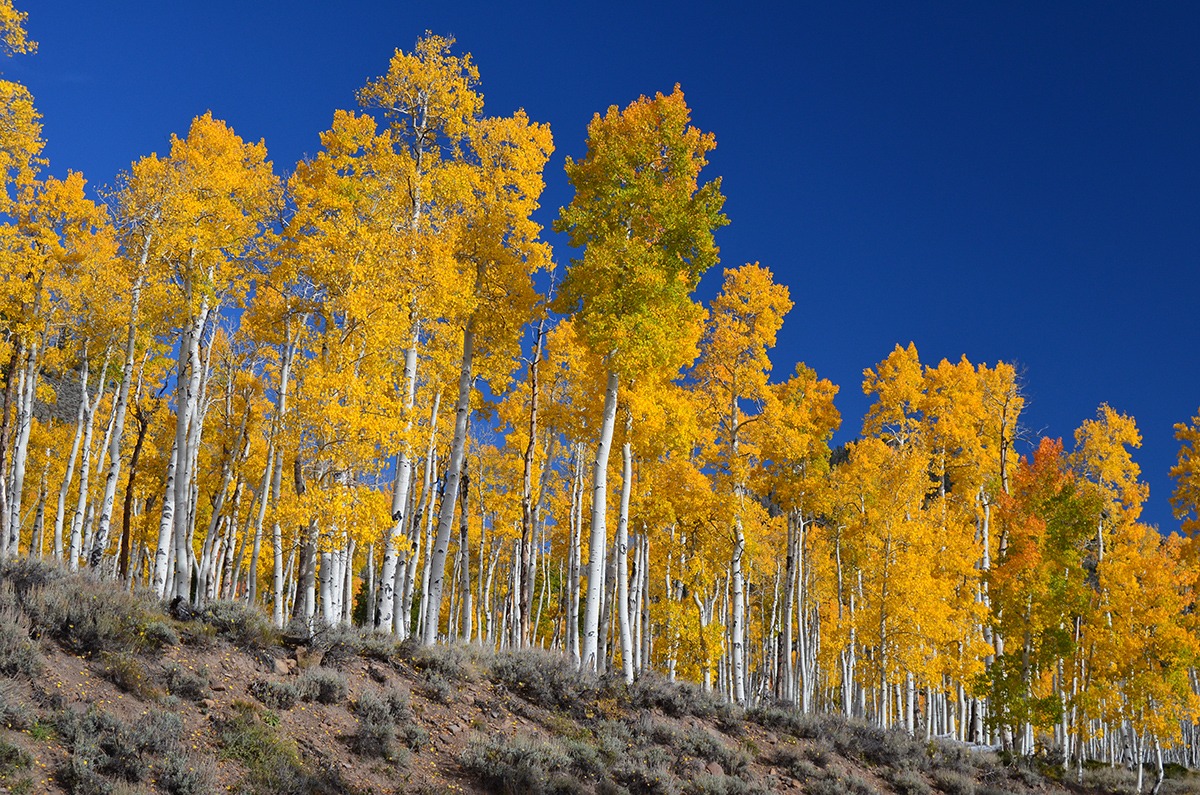
But even these get beaten if you count clonal organisms. Remember Pando from Chapter 6? That grove of quaking aspen trees in Utah, covering 106 acres, all connected by one massive root system? The individual trunks are relatively young (around 100 to 150 years old each), but the root system they all share has been estimated at thousands of years old. The trunks die and get replaced, but the organism as a whole just keeps going.
The Gardener’s Perspective
For gardeners, the biggest practical difference between annuals and perennials comes down to planning. Annuals give you instant results. You plant marigold seeds in May and you have flowers by July. But you will be buying more marigold seeds next year.
Perennials take more patience. Many perennials barely do anything their first year. There is an old gardening saying about herbaceous perennials: “First year they sleep, second year they creep, third year they leap.” That means year one, not much happens. Year two, you see some growth. Year three, the plant finally takes off and starts looking like the picture on the tag. Perennial gardening is a long game, but the payoff is a garden that mostly takes care of itself once it is established.
Putting It All Together: Annual vs. Biennial vs. Perennial
Here is a quick way to think about these three strategies:
- Annuals are sprinters. One season, maximum effort, then done. (Tomatoes in most climates, zinnias, basil, corn)
- Biennials are middle-distance runners. Two years, with year one for building and year two for reproducing. (Carrots, foxglove, hollyhocks, parsley)
- Perennials are marathon runners. Multiple years, with some living for decades or centuries, reproducing many times over their lifetime. (Oak trees, hostas, lavender, apple trees)
None of these strategies is “better” than the others. They are just different solutions to the same basic challenge: how do you make sure your genes get passed on to the next generation? Annuals bet on speed and volume. Biennials bet on energy storage. Perennials bet on longevity and repeated reproduction. All three work. That is why all three exist.
The Tricky Ones
Before we move on, a quick note: not every plant fits neatly into one category. Some plants that are perennials in warm climates are treated as annuals in cold climates because they cannot survive frost. Tomatoes are a perfect example. In their native habitat of Central and South America, tomato plants are actually perennials. They can live for several years in frost-free conditions. But in most of North America, they are killed by the first hard frost, so we grow them as annuals. Same plant, different strategy depending on where it lives.
Peppers, geraniums, and snapdragons are the same way. They are perennials in warm climates, annuals in cold ones. So, when a seed packet says “annual,” it sometimes means “annual in your climate,” not necessarily “annual everywhere.”
Sometimes you’ll get a surprise, too. Here at Guest Hollow, some of our snapdragons have returned for several years despite the harsh winters. Even though we expected them to behave like annuals, they kept coming back year after year! These tough snapdragons would be excellent candidates for saving their seeds to breed a more cold-tolerant strain of snapdragon.
Determinate vs. Indeterminate Growth: When to Stop (or Not)
Now we are going to shift gears and talk about a concept that comes up constantly in gardening but almost never in everyday conversation: determinate vs. indeterminate growth.
Here is the basic question: does the plant have a built-in “stop” signal, or does it just keep growing until something kills it?
Determinate Growth: A Built-In Finish Line
Determinate means “having a fixed limit.” A plant with determinate growth reaches a certain size, flowers, sets fruit, and then stops growing. It has a built-in finish line. Once it hits that point, it is done adding new stems, leaves, and flowers. The plant’s apical meristems (remember those from Chapter 4, the “forever young” cells at the growing tips?) actually switch from producing stems and leaves to producing a flower, and once they do, that growing tip is finished.
Tomatoes are the most famous example, and this is where it matters most for gardeners.
Determinate tomatoes (sometimes called “bush” tomatoes) grow to a set height, usually around 3 to 4 feet, then stop. All the flowers open within a fairly short window, and all the fruit ripens at roughly the same time. Then the plant is basically done for the season. It might produce a few more small fruits, but its main job is finished.
This is actually great if you want a huge batch of tomatoes all at once. Making salsa? Canning tomato sauce? A determinate tomato gives you a big harvest in a concentrated burst, which is exactly what you need for those projects. Varieties like Roma (the classic sauce tomato) and Celebrity are determinate.
Determinate tomatoes are also easier to manage in a garden. They stay compact, usually do not need as much staking or caging, and they have a predictable timeline. Plant in May, harvest in August, clean up in September. Done.


Indeterminate Growth: No Off Switch
Indeterminate means “having no fixed limit.” An indeterminate plant just keeps growing, flowering, and producing fruit until something external stops it, usually frost, disease, or the gardener finally giving up and ripping it out.
Indeterminate tomatoes (sometimes called “vining” tomatoes) are the ones that take over your garden. They just keep growing. And growing. And growing. The main stem keeps adding new leaves and flowers from its apical meristem, which never switches over to a flower like it does in determinate varieties. Side branches do the same thing. A single indeterminate tomato plant can easily reach 6 to 10 feet tall (or taller!) if given support, and it will keep producing new flowers and fruit all season long.
This is why indeterminate tomatoes need those big cages or tall stakes. Without support, the vines flop all over the ground, and the fruit rots where it touches the soil. If you have ever seen a tomato plant that completely swallowed its cage and started reaching for the neighbor’s fence, it was almost certainly indeterminate.
Here at Guest Hollow, we grow our indeterminate tomatoes in a greenhouse (due to our short season climate) and have most of them grow up strings (via the string method).
The advantage of an indeterminate is a steady supply of tomatoes from midsummer until the first frost. Instead of getting 30 tomatoes all at once (like a determinate), you get a handful every few days for months. Cherry Tomatoes, Beefsteak, and Brandywine are all indeterminate varieties. If you want tomatoes on your sandwich from July through October, these are what you plant.
Remember in Chapter 4 when we talked about topping tomato plants, how snipping the main stem’s tip removes the apical meristem and triggers side branches to grow? That technique is especially useful with indeterminate tomatoes, because it forces the plant to put more energy into ripening the fruit it already has instead of endlessly reaching for the sky.
You do NOT want to do that with determinate tomatoes though!
Beyond Tomatoes
The determinate/indeterminate distinction is not just a tomato thing. It shows up across the plant world.
Bush beans vs. pole beans. Bush beans are determinate. They grow to about 2 feet tall, produce a flush of beans, and then stop. Pole beans are indeterminate. They keep climbing, keep flowering, and keep making beans until frost takes them out. Same species, different growth pattern. If you have a trellis and want beans all summer, go with pole beans. If you want one big harvest for freezing, bush beans are your friend.
Peas work the same way. Dwarf (bush) peas reach a set height and produce their pods in a burst. Tall (climbing) peas keep going and produce over a longer period.
Cucumbers and squash also come in both types. Bush varieties stay compact and produce a concentrated harvest. Vining varieties sprawl across the ground (or up a trellis) and keep producing longer.
The pattern is consistent: determinate varieties are compact, concentrated, and predictable. Indeterminate varieties are vigorous, ongoing, and sometimes unruly. Neither is better. It just depends on what you want from your garden.
Determinate and Indeterminate Growth in the Bigger Picture
The determinate/indeterminate concept extends far beyond the vegetable garden. In fact, it connects to one of the most fundamental differences between how plants and animals grow.
Most Animals: Determinate Growers
You are a determinate grower. So is your dog, your cat, and pretty much every mammal and bird you have ever seen. You grew from a baby to your current size, and at some point in your late teens or early twenties, you will stop getting taller. Your bones will finish growing. Your body will reach its adult size, and that is it. You might gain or lose weight, but your skeleton is not going to keep adding length.
This is because human growth plates (the zones where bones elongate) eventually close. The growth factory shuts down. Your body reaches its genetically determined size and says, “We’re done here.”
Most Plants: Indeterminate Growers
Many plants, on the other hand, are indeterminate growers. Remember from Chapter 4 how we learned that apical meristems are “forever young” cells that keep dividing throughout the plant’s entire life? A 300-year-old oak tree still has active apical meristems at the tips of every branch and root, still growing, still dividing. A 5,000-year-old bristlecone pine is still adding new growth rings every year. Plants don’t have a growth plate that closes. They don’t have a genetically programmed adult size the way you do. Their meristems just keep going.
This is why there is no theoretical maximum height for a tree. Practically, physics and water transport set limits (it gets harder and harder to pull water hundreds of feet up from the roots, remember the xylem discussion from Chapter 5?), but the meristems themselves never “decide” to stop. They are limited by engineering problems, not by a biological stop signal.
The Lobster Detour
This is the lobster part I promised you.
Lobsters are one of the rare animals that show indeterminate growth. Unlike you and your dog, lobsters do not stop growing when they reach a certain size. They keep molting (shedding their shell and growing a bigger one) and getting larger throughout their lives. A really old lobster can be enormous. The largest American lobster ever recorded weighed over 44 pounds and was estimated to be around 100 years old.
Why bring up lobsters in a botany book? Because it highlights how unusual plants are compared to most of the animal kingdom. The kind of open-ended, “keep growing forever” strategy that is rare and remarkable in animals is actually the default for plants. Every tree in your yard is doing what only a handful of animal species do: growing for its entire life, with no built-in off switch.
Sharks, many species of fish, and some reptiles like crocodiles and certain turtles are also indeterminate growers. But in the plant world? Almost everything grows this way. Plants are the indeterminate growth champions of the living world.
Determinate vs. Indeterminate Flowering
The determinate/indeterminate concept also applies to how plants flower, and understanding this explains a lot of things you have probably noticed in gardens without knowing why.
Determinate Flowering
Some plants produce all their flowers at once in a big showy burst, and then they are done. The apical meristem converts to a flower, and that is the end of growth on that stem. Tulips, sunflowers (the single-headed kind), and many spring-blooming trees like dogwoods and magnolias do this. You get one spectacular display, and then the show is over for the year.
This is actually why deadheading (removing spent flowers) does not help with tulips or most spring-blooming trees. The flowering period is genetically fixed. Once it is over, it is over. No amount of deadheading will produce more flowers until next year.

Indeterminate Flowering
Other plants keep producing new flowers continuously throughout the growing season. The stem keeps growing from the apical meristem, producing new buds as it goes, so there are always new flowers coming in behind the old ones. Roses (especially modern repeat-blooming varieties), petunias, marigolds, zinnias, and impatiens all flower this way.

This is why deadheading works so well on these plants. When you remove a spent flower before it makes seeds, you are sending a signal to the plant: “You haven’t completed your mission yet. Keep trying!” The plant responds by producing more flowers. It is trying to make seeds, and you keep taking the flowers away before it can, so it keeps making more. You and the plant are locked in a friendly battle all summer long, and the result is a non-stop flower show.
If you have ever stopped deadheading your petunias in August and noticed that the plant slowed way down on flowering, that is exactly why. You let it make seeds, and once it did, the plant said, “Mission accomplished,” and started winding down. Snip off those seed pods and it goes right back to blooming.
Monocarpic vs. Polycarpic: One and Done, or Many Times Over
Here is one more pair of terms that ties this whole chapter together.
A monocarpic plant flowers and fruits once, then dies.
Mono means one.
Carpic comes from the Greek karpos, meaning fruit.
One fruiting. That is it.
All annuals are monocarpic. All biennials are monocarpic. They flower once, set seed, and die. That’s their whole deal.
But here is the twist: some perennials are monocarpic too. And that is where things get interesting.
Century plants (Agave americana) are the most dramatic example. Despite the name, they do not actually take a hundred years to flower, but they do take a long time, usually 10 to 30 years depending on growing conditions. The agave just sits there for decades, slowly growing bigger, storing more and more energy in its thick, succulent leaves (remember succulent leaves from Chapter 11?). Then one day, it sends up a massive flower stalk that can reach 15 to 30 feet tall, looking like a giant asparagus spear shooting toward the sky. The stalk produces hundreds of flowers, the plant sets seed, and then the entire plant dies. Decades of patience for one spectacular grand finale.

Some bamboo species are monocarpic too, and their story is even stranger. Certain bamboo species grow vegetatively for decades (remember how bamboo spreads through rhizomes, as we discussed in Chapter 9?), sometimes 40, 60, or even 120 years, before suddenly flowering all at once. And here is the truly wild part: all the bamboo of that species, everywhere in the world, flowers at the same time. Bamboo planted from the same original stock in Japan, England, and Brazil will all flower in the same year, even though they have been growing in completely different climates on different continents. After flowering and setting seed, the bamboo dies.

Nobody fully understands how the timing works. It appears to be some kind of internal genetic clock, but the details are still being studied. It is one of the great unsolved puzzles in botany.
A polycarpic plant, on the other hand, flowers and fruits multiple times during its life.
Poly means many.
Most perennials are polycarpic.
Poly means many. Most perennials are polycarpic. An apple tree produces fruit every year for decades. A rose bush blooms every summer. An oak tree drops acorns annually for centuries. They reproduce over and over and over again, which is one of the reasons perennials can afford to take their time getting started. They do not need to rush, because they will have many chances to reproduce.
Chapter Wrap-Up
If there is one thing to take away from this chapter, it is that plants have a lot of different strategies for handling the basic problems of life, and none of them is the single “right” answer. Living fast and dying young works. Playing the long game works. Growing to a fixed size works. Growing forever works. Flowering once and going out in a blaze of glory works. Flowering every year for centuries works.
The next time you are in a garden, look around and see if you can figure out each plant’s strategy. That marigold? Annual, determinate, monocarpic. One season, one burst of flowers, then done. That rose bush? Perennial, indeterminate flowering, polycarpic. It will be blooming in that same spot for decades if someone takes care of it. That massive oak tree in the front yard? Woody perennial, indeterminate growth, polycarpic. It might outlive the house it is shading.
And that bristlecone pine on its lonely mountainside in California? Woody perennial, indeterminate growth, polycarpic. It has been standing there since before recorded history began, and it shows no signs of stopping.
Plants have a lot of ways to stay alive. Now you know the main ones.
Here is something to think about. Throughout this book, we have been bumping into the same invisible force over and over again without fully exploring it. In Chapter 4, we met auxin, the hormone that makes pruning work. In Chapter 7, we learned that auxin tells roots which way is down. In Chapter 8, we saw it bossing lateral buds into silence. In Chapter 11, we watched it bend stems toward light. In Chapter 15, we discovered that a tiny gas called ethylene controls whether your banana ripens on the counter or not. And just now in this chapter, we learned that a cold treatment can trick an artichoke into flowering a whole year early.
Every single one of those stories was really a hormone story. We just were not ready to tell it yet.
In Chapter 18, we are going to pull back the curtain and meet the full cast of chemical messengers running the show inside every plant. Auxin is just one of them. There are others, and some of them do things that will genuinely surprise you. One of them is a gas that ripens fruit, kills flowers, and can be triggered by stress. Another one can make a dwarf plant grow tall overnight. Another fights auxin in a constant tug-of-war over whether a plant should grow taller or get bushier.
Plants cannot think. They cannot see. They cannot move from one place to another. But they coordinate incredibly complex behaviors across their entire body using nothing but tiny amounts of chemicals. Chapter 18 is the story of how they pull it off.
Previous: Chapter 16: Seeds: Life in a Box